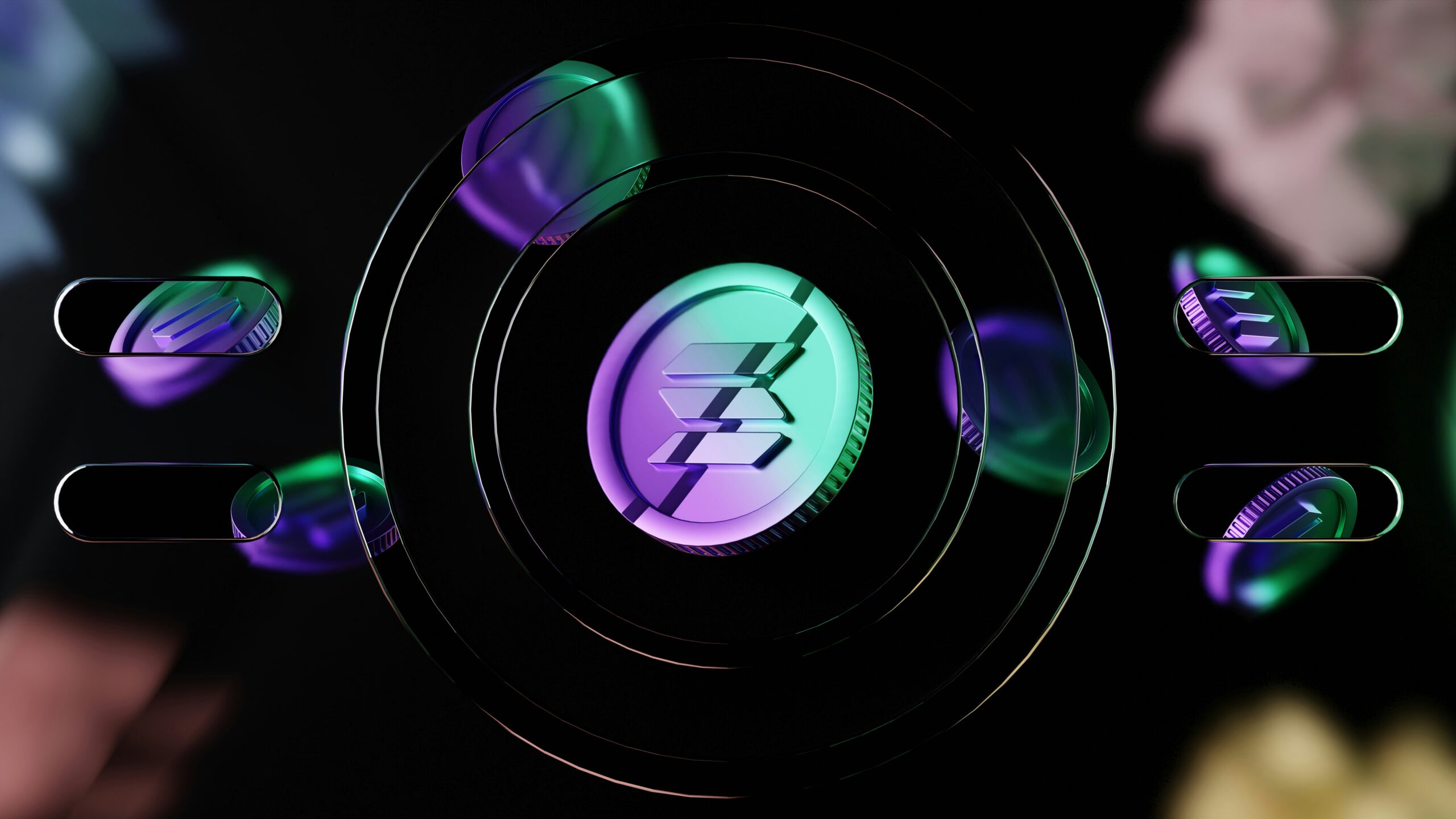
Solana (SOL) is one of the fastest, most scalable, and most talked-about blockchains in the world today.
Launched in 2020, Solana quickly became popular because of its lightning-fast transactions, low fees, and powerful ecosystem supporting NFTs, Web3 apps, and DeFi platforms.
- Solana prioritises speed and low fees at its base layer.
- Proof of History timestamps transactions to boost throughput.
- Fees are typically fractions of a cent, enabling high-frequency use.
- Popular for DeFi, NFTs, gaming and payments.
- The trade-off is higher hardware requirements for validators.
- Past network outages remain a legitimate criticism to weigh.
In this article, we will break down everything:
✔ What Solana is
✔ How it works
✔ Why it became so famous
✔ Its advantages & real-world uses
✔ Whether Solana is worth watching in 2025
Let’s dive in.
What Is Solana?
Solana is a high-speed Layer 1 blockchain designed to process thousands of transactions per second with extremely low fees.
It was created by Anatoly Yakovenko, a former Qualcomm engineer, who wanted to solve the biggest problem in blockchain:
👉 Slow speed + high gas fees
Solana introduced a new technology called Proof of History (PoH), which allows transactions to be processed faster and more efficiently than most blockchains.
🚀 Why Is Solana So Famous? (Key Reasons)
Mind-Blowing Speed: Up to 65,000 TPS
Solana is known as one of the fastest blockchains in the world.
Ethereum can handle around 30 TPS, but Solana can process up to 65,000 TPS.
This speed makes Solana perfect for high-performance apps.
Very Low Fees (Less than $0.01)
Users love Solana because transaction fees are extremely low — often less than a penny.
NFT trading, gaming, DeFi, or transfers — everything becomes cheaper.
Massive Ecosystem Growth
Solana is home to:
- Popular NFT collections (DeGods, Okay Bears)
- Fast DeFi decentralized exchanges
- Blockchain gaming projects
- Web3 apps and meme coins
It has become the hub for NFT creators and new crypto startups.
Proof of History (PoH) Technology
Solana’s unique innovation is Proof of History, a cryptographic clock system.
This system allows nodes to process transactions in parallel — boosting speed and scalability.
Huge Developer Support
Solana offers easy tools for developers, attracting:
- Blockchain engineers
- Game builders
- NFT marketplaces
- Smart contract developers
This rapid developer growth helped push Solana adoption worldwide.
⭐ What Can Solana Be Used For?
NFT Marketplaces
Solana is one of the top chains for NFTs due to low fees and fast minting.
Web3 Apps
Apps that require speed choose Solana — like messaging apps, social networks, and gaming.
DeFi Platforms
People use Solana to swap tokens, stake coins, and earn yields.
Payments
Businesses prefer Solana for quick payments and microtransactions.
⭐ Advantages of Solana
| Feature | Solana |
|---|---|
| Transaction Speed | Very High |
| Fees | Extremely Low |
| Scalability | Excellent |
| Developer Support | Strong |
| Energy Usage | Low |
⭐ Is Solana a Good Project for the Future?
Solana continues to grow due to:
✔ High performance
✔ Strong community
✔ Partnership with major brands
✔ Increasing Web3 adoption
Many experts believe Solana will remain one of the leading blockchains in 2025 and beyond.
❓ Frequently Asked Questions (FAQ)
Is Solana better than Ethereum?
Solana is faster and cheaper, but Ethereum is more secure and mature. Both are strong in their own way.
What is SOL used for?
SOL is used for:
- Transaction fees
- Staking
- Governance
- DeFi and NFT operations
Is Solana good for beginners?
Yes, because transactions are quick and cheap, making it easy to explore blockchain use cases.
Proof of History: The Innovation Behind the Speed
Solana’s headline feature deserves a plain-English explanation. In most blockchains, validators must communicate extensively to agree not just on which transactions are valid, but on what order they happened in. That coordination takes time.
Proof of History tackles this by creating a verifiable cryptographic clock. Before consensus even begins, transactions are stamped into a continuously running sequence that proves one event occurred before another. Validators can then agree on ordering without extensive back-and-forth messaging.
The result is dramatically higher throughput. Solana works alongside Proof of Stake for security while using this timekeeping layer to remove a major bottleneck.
The Trade-Offs Solana Makes
Every blockchain design involves compromise, and honest evaluation means acknowledging Solana’s:
- Higher validator requirements: processing thousands of transactions per second demands powerful hardware, which raises the barrier to running a validator and concentrates participation compared to networks with lighter requirements.
- Network stability history: Solana has experienced outages where the network halted and required coordinated restarts. The team has shipped substantial reliability work since, but it remains a fair criticism to weigh.
- Base-layer scaling philosophy: where Ethereum pushes scale to Layer-2 networks, Solana scales the base layer directly — a different bet with different risks.
None of these are disqualifying, but anyone investing should understand them rather than only the marketing.
What Solana Is Actually Used For
Cheap, fast transactions unlock use cases that are impractical on expensive networks:
- High-frequency trading and DeFi, where paying several dollars per transaction would be prohibitive.
- Consumer apps and gaming, where users make many small interactions.
- NFT minting and trading at low cost, which drove significant activity.
- Payments, where sub-cent fees make micro-transactions viable.
The common thread: applications where transaction cost, not just capability, determines whether something works at all.
Common Questions About Solana
Is Solana faster than Ethereum?
At the base layer, yes — significantly. However, Ethereum’s Layer-2 rollups also deliver fast, cheap transactions while settling to Ethereum’s security. The comparison is less one-sided than raw base-layer numbers suggest.
Can I stake SOL?
Yes. SOL holders can delegate to validators and earn staking rewards without running hardware themselves. Our staking guide explains how delegation and rewards work generally.
Are Solana’s outages still a concern?
Reliability has improved considerably through protocol upgrades, but the history is a legitimate factor in assessing the network. Judge it on recent uptime rather than either dismissing or over-weighting past incidents.
How do Solana fees compare in rupee terms?
Typical transactions cost a tiny fraction of a rupee, versus potentially hundreds of rupees on Ethereum’s main network during congestion — the practical reason many Indian users explore it.
Where the Solana Debate Gets Oversimplified
Solana is often framed as an “Ethereum killer,” as though one blockchain must eventually defeat the other. That framing misreads how the ecosystem actually works. These networks make genuinely different engineering trade-offs — Solana optimising raw base-layer throughput, Ethereum optimising for a maximally decentralised settlement layer with scaling above it. Developers and users increasingly operate across multiple chains depending on what each application needs. The realistic future looks less like a single winner and more like specialised networks coexisting, which makes “which chain wins?” a less useful question than “which chain suits this specific use case?”
🎯 Conclusion
Solana became famous because it solved two major problems in blockchain technology:
🔥 Speed
🔥 Low fees
Its innovative Proof of History system, strong ecosystem, and growing community make it one of the most influential blockchain networks today.